- Dilovası Organized Industrial Zone, 1st Section, Dicle Caddesi No:18, Dilovası / Kocaeli, Türkiye
- info@ovaenerji.com.tr
- +90 262 754 88 99
Hydro Generator Rewinding
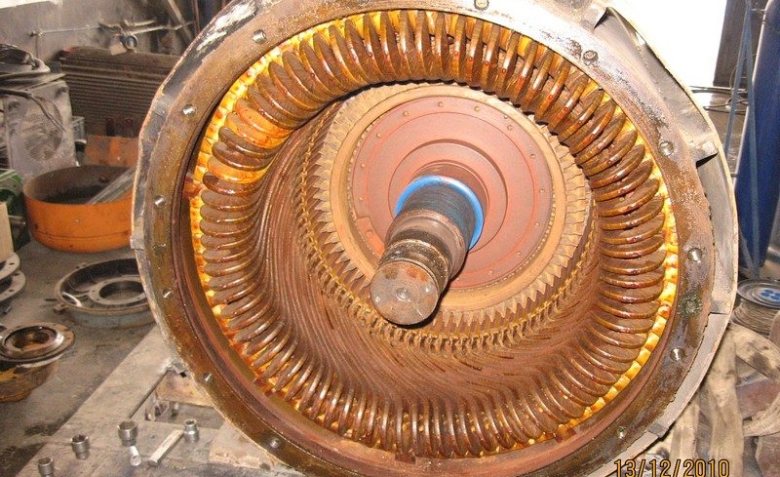
Hydro Generator Rewinding
Hydro generator rewinding: renewal of stator windings and rotor pole coils of hydropower plant generators, with insulation and surge testing.
Hydro generator rewinding is a large-scale, precision repair job covering the renewal of the stator windings and rotor pole coils of synchronous generators in hydropower (HES) plants. Ova Enerji has served power plants since its foundation; today we rewind the stator and rotor windings of hydropower generators at our workshop in Dilovası OSB.
A winding fault in a generator means the plant stops producing. That is why correct fault diagnosis, rewinding with the right materials and methods, and comprehensive pre-delivery testing are decisive.
How a hydropower generator is built
In hydropower plants, the turbine drives a synchronous generator that usually runs at low or medium speed. To generate grid frequency at low speed, these generators have a large number of salient poles on the rotor. Each pole carries an excitation (pole) coil supplied with direct current.
The stator carries the three-phase winding that conducts the generated voltage. Depending on the voltage level, this winding may consist of form-wound coils protected by mica-based insulation. Because the stator and rotor windings are exposed to different stresses, each is assessed separately.
Common faults in hydropower generators
- Ageing of stator insulation: Over many years, thermal cycling, moisture and contamination weaken the insulation, leading to earth leakage and phase-to-phase faults.
- Partial discharge and surface tracking: Seen especially at coil ends and slot exits.
- Turn-to-turn short circuits in pole coils: These cause magnetic imbalance, vibration and overheating.
- Earth faults in the excitation winding: Breakdown of the insulation between the rotor winding and the frame.
- Coil loosening: As wedges and lashings loosen, the coils vibrate and the insulation wears.
A drop in periodic insulation readings, rising temperature, a change in vibration or protection trips indicate that the winding needs a detailed inspection.
Our hydro generator rewinding process
- Initial inspection and records: The condition of the stator and rotor windings is photographed and electrical measurements are taken.
- Quotation and approval: A quotation based on the findings is submitted; no additional work is done without your approval.
- Stripping and winding data: The existing windings are stripped; coil dimensions, winding data and the connection diagram are recorded.
- Core check: The stator core is checked with a core loss (short-circuit) test and a thermal camera.
- Winding renewal: The stator winding and required pole coils are remanufactured and fitted in line with the original data.
- Varnishing and drying: The windings are varnished and oven-dried.
- Balancing: Rotors within size limits are balanced to ISO 1940/1 on our balancing machine rated for 3 m diameter and 3 tonnes.
For lifting and turning heavy frames, our workshop has a 20-tonne overhead crane and a 5-tonne monorail crane.
Testing and reporting
- Ohmic resistance measurements on the stator and pole coils; pole-to-pole comparison
- Insulation resistance and polarisation index based on TS EN 60034-15
- Verification of insulation withstand with a hi-pot test
- Surge testing with a Baker-SKF tester; graphical and numerical report
Related services
For our work in power plants, see our power and hydro page. For motors on plant auxiliary equipment, see medium voltage motor rewinding; for our measurement methods, motor testing services; and for rotors, industrial balancing.
Request a quote with your generator's nameplate data and a description of the fault; we serve power plants across Türkiye from our workshop in Dilovası, Kocaeli.
Frequently Asked Questions
Can only the rotor pole coils be renewed?
Yes. Which windings are renewed is decided on the basis of the measurements and observations made during the initial inspection; stator and rotor work are shown as separate items in the quotation.
How is the generator transported, and which parts come to the workshop?
The dismantling and transport plan is agreed with you during the preliminary assessment, based on the generator's dimensions and the conditions at the plant.
Which test results do I receive on delivery?
Winding resistance, insulation resistance, polarisation index, hi-pot and surge test results, together with the balancing report where applicable, are provided on delivery.
How are lead time and cost determined?
The size of the generator, the windings to be renewed and the condition of the core determine lead time and price; these are stated in writing in the quotation after the initial inspection.